Just by adding the leg press to your program you can target quads, hamstrings and glutes with heavy, safe loading to accelerate strength and muscle gains while managing spinal stress; pairing variations and progressive overload optimizes adaptation - learn proper technique at How to Do the Leg Press to Build Major Lower Body ... to maximize results.
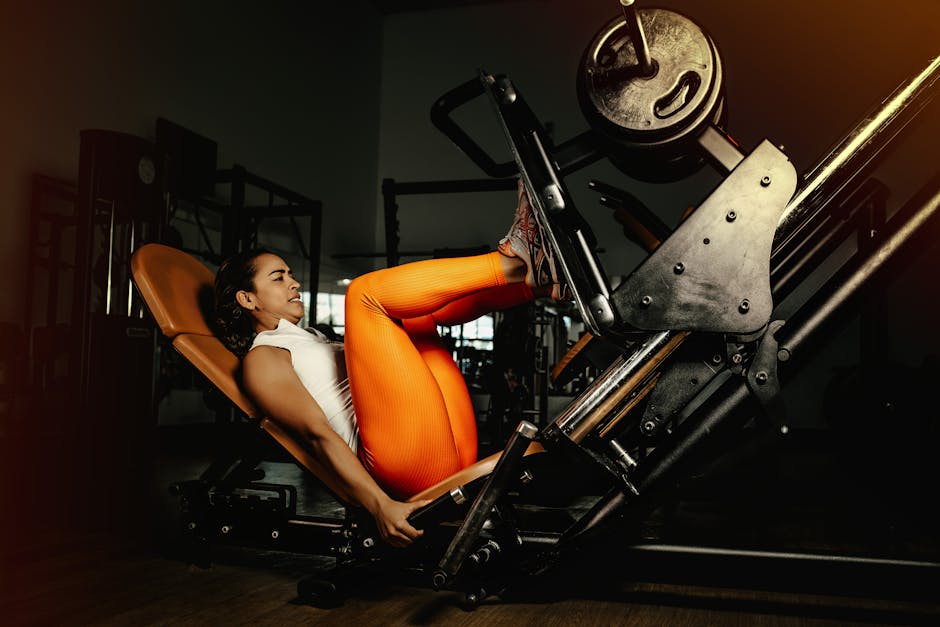
Key Takeaways:
- Targets quadriceps, glutes, and hamstrings with a controlled range of motion to promote focused hypertrophy and improve muscle balance.
- Enables heavy progressive overload with less spinal loading than back squats, aiding strength and mass gains while lowering lower-back stress.
- Offers foot-placement and ROM variation for specific muscle emphasis, safer technique for beginners or rehab, and useful transfer to functional pushing and standing movements.
Understanding the Leg Press
Anatomy of the Leg Press
You engage primarily the quadriceps (vastus lateralis/medialis/intermedius) for knee extension, while the gluteus maximus and hamstrings assist hip extension as you press; calves provide plantarflexion at lockout. You can bias muscles by foot placement-lower and narrower emphasizes quads, higher and wider shifts load to glutes and hamstrings. Typical programming uses 3-5 sets of 6-12 reps for mass, with controlled descent to protect joint structures.
| Structure | Role / Notes |
| Quadriceps | Primary knee extensors; targeted by low foot placement |
| Gluteus Maximus | Hip extensor; emphasized with higher foot placement and deeper angles |
| Hamstrings | Assist hip/knee control; more active at deeper knee flexion |
| Gastrocnemius (Calves) | Plantarflexion at lockout; engaged when pushing through toes |
| Knee Joint | Avoid extreme flexion past ~90° when load is heavy to limit compressive forces |
- Low foot placement = greater quad stimulus and shorter ROM
- High foot placement = increased hip extension and glute/ham emphasis
- Controlled cadence reduces shear and improves hypertrophic stimulus
- Progressive overload via increments of 2.5-5 kg helps steady gains
- After you adjust load and stance, track pain-free range and recovery to optimize progress
Types of Leg Press Machines
You’ll encounter plate-loaded 45° sleds, horizontal sleds, vertical presses, seated/hip-sled variations, and unilateral machines. The 45° is most common for strength work due to natural loading path; horizontals reduce spinal shear and suit beginners; verticals increase ROM but raise compression forces. You should pick a machine based on mobility, training goal, and whether you need unilateral options for imbalance correction.
| Machine Type | Main Characteristics / Use |
| 45° Sled | Common for heavy sets; natural load path, plate-loaded options |
| Horizontal Sled | Lower spinal loading, easier for novices, stable platform |
| Vertical Leg Press | Greater ROM and knee flexion; increases compressive forces |
| Seated / Hip-Sled | Compact, good for consistent foot placement and rehab use |
| Unilateral Machines | Single-leg focus to address asymmetries and transfer to single-leg tasks |
You can program machines strategically: use the 45° sled for heavy 4-6 rep strength blocks, switch to 8-12 reps on horizontals for volume phases, and add unilateral sets for balance-try 3 sets of 8-10 single-leg reps. You should also vary foot placement within cycles to shift emphasis without changing loads, and monitor knee angle to keep joint stress appropriate.
- Choose horizontal machines if low back tolerance is limited
- Prefer 45° sleds for maximal loading and power development
- Use vertical presses sparingly when you need extra ROM but can manage compression
- Include unilateral work 1-2 sessions weekly to fix imbalances
- After selecting a machine, prioritize technique, progressive overload, and consistent tracking to ensure measurable gains
Benefits of the Leg Press for Lower-Body Strength
You can load the leg press far heavier than many free-weight movements-often 2-3× your bodyweight-so progressive overload becomes easier to manage. It lets you isolate quadriceps, glutes and hamstrings to increase work per set, target lagging muscle groups, and reduce spinal loading compared with squats. When used alongside compound lifts, the leg press boosts total weekly stimulus and accelerates both strength and hypertrophy adaptations.
Muscle Activation and Growth
Varying foot placement and range of motion shifts activation: lower feet emphasize the quads, higher feet increase glute and hamstring contribution. You can use heavy sets (3-6 reps) for strength or moderate ranges (6-12 or 8-15 reps) for hypertrophy. When volume is matched, research shows machine-based leg press can produce hypertrophy comparable to squats, making it an effective tool to overload specific muscles.
Joint Safety and Stability
The machine’s fixed path and backrest reduce lumbar shear and limit uncontrolled knee valgus compared with free-weight squats, improving joint alignment under load. You control depth to avoid painful end ranges, and safety stops allow near-maximal lifts without a spotter. As a result, you can handle heavier loads while maintaining consistent joint mechanics through each repetition.
Apply practical cues: set the seat so knees track roughly over toes at about 90° of flexion to minimize patellofemoral stress; moving your feet a few inches higher shifts demand to the hips. Avoid full knee lockout and use a 2-3 second eccentric tempo to blunt peak joint forces. Clinicians often program 2-4 sets of 8-15 reps on the leg press during post-op knee rehab to rebuild strength without axial spine loading.
Leg Press vs. Other Lower-Body Exercises
Comparison to Squats
You can load the leg press substantially more than a back squat-many lifters move roughly 20-50% more weight-because the machine stabilizes your torso and removes balance demands. Squats, however, recruit your erectors, core, and stabilizers to a far greater extent and transfer better to athletic, unilateral, and functional patterns. Use the leg press for targeted quad/glute overload and squats when you want systemic strength, hormonal response, and improved motor control under free-weight conditions.
Leg Press vs. Squat - Key Differences| Leg Press | Squat |
|---|---|
| Higher absolute loading capacity (often 20-50% more), less spinal compression | Lower absolute loads but greater axial/spinal loading and systemic demand |
| Fixed plane, easier to isolate quads/glutes via foot placement | Requires balance and technique, engages stabilizers and posterior chain |
| Gentler for many rehabs; ideal for controlled hypertrophy (8-15 reps) | Better for functional strength, power transfer, and core development |
Unique Advantages of the Leg Press
You gain precise control over range of motion and foot positioning, letting you emphasize quads, glutes, or hamstrings-high foot placement increases glute/hamstring drive, low and narrow targets the quadriceps and vastus medialis. Because your torso is supported, you can safely perform heavy triples or high-volume sets (3-5 sets of 6-12+ reps) without the same lumbar stress as squats, accelerating hypertrophy when programmed progressively.
For programming, pair heavier leg-press work (3-5 sets of 4-8 reps) after strength-focused squats to increase total training tonnage, or use 3-4 sets of 10-15 reps for quad-centric hypertrophy days. You can manipulate tempo (2-0-2) and short pauses at the bottom to boost time under tension; athletes with lower-back issues often regain quad size and strength quicker when the leg press replaces or supplements free-weight squats during a 6-12 week block.
Proper Technique for Maximum Gains
To maximize growth, focus on controlled range of motion, foot placement, and progressive overload. Place your feet shoulder-width with toes slightly turned out so knees track over toes; lower until knees reach roughly 90° to recruit quads and glutes efficiently. Use a 2-0-1 tempo on eccentric/pause/concentric to increase time under tension and avoid locking knees at extension. Aim for 3-4 sets of 6-12 reps depending on strength goals, increasing load by about 2.5-5% when you hit the top of your rep range.
Setting Up the Machine
Adjust the backrest and sled so your knees form roughly a 90° angle at the bottom; on many 45° machines this means sitting 10-15 cm back from full travel. Place your feet shoulder-width or slightly higher to bias hamstrings and glutes, while a lower placement emphasizes quads. Press your lower back flat against the pad, lock safety catches before loading, and ensure your heels stay in contact with the platform so force transfers evenly through the foot.
Common Mistakes to Avoid
Loading too much, using a shallow range, and locking out at the top are frequent errors that limit gains and increase injury risk. You should also avoid hips rising or lower-back rounding, which shifts load off target muscles. Watch for knees collapsing inward under load-cue knees to track over the second toe and reduce weight if form degrades. Excessive bouncing off the bottom reduces tension and wastes reps.
If momentum overrides muscle control, drop the weight 20-30% and rebuild form with structured warm-ups (for example: 2×8 at 50% and 1×6 at 70%). Employ a 3-second descent with a 1-second pause at ~90° to remove the rebound and force the concentric to be muscular. When heels lift, raise foot placement slightly or deliberately press through the whole foot; to fix knee valgus, use light resistance bands around the knees or practice single-leg presses to improve lateral stability.
Incorporating Leg Press into Your Workout Routine
You can slot the leg press into lower-body days as a heavy quad-dominant or volume movement while sparing your spine; use it as a primary lift on squat-light days or after squats for extra sets. For equipment rationale see Why It's Important To Have Leg Press Machines at the Gym. Start with 2-4 warm-up sets then 3-6 working sets tailored to your goals.
Ideal Frequency and Volume
You should train leg press 2-3 times per week if targeting growth and 1-2 times for maintenance. For strength use 3-6 sets of 3-6 reps at ~80-90% 1RM with 2-3 minutes rest; for hypertrophy use 3-5 sets of 6-12 reps at 70-85% 1RM with 60-90 seconds rest. Example protocol: 2×/week, 4×8 at 75% 1RM for solid hypertrophy stimulus.
Designing a Balanced Lower-Body Program
You should balance quad-dominant leg press work with hip hinges, unilateral movements, and calf/hamstring isolation. Start sessions with multi-joint lifts like squats or heavy leg press, follow with Romanian deadlifts or glute bridges to load the posterior chain, then add lunges or split squats and finish with calf raises or hamstring curls to address weak links.
You should plan weekly volume per muscle: aim for 12-20 weekly sets for quads and 8-15 for hamstrings, split across 2-3 sessions. Sample split - Day A: heavy leg press 4×6 at ~80% 1RM, Romanian deadlift 3×5, walking lunges 3×8/leg, calf raises 3×12; Day B: lighter leg press 3×12 at ~65-70% 1RM, single-leg RDL 3×8, seated hamstring curl 3×10. Track your RPE and increase load or sets when you complete top reps at RPE ≤8.
Potential Risks and Safety Considerations
You may place heavy compressive loads on your spine and knees during the leg press, especially with maximal effort or deep knee flexion; studies show knee joint reaction forces can reach 2-3 times bodyweight depending on foot position and range. If you drive with your hips rounded, you increase disc pressure and risk herniation. Use controlled tempos, avoid ballistic reps, and stop if sharp pain, tingling, or numbness appears in your legs or lower back.
Who Should Avoid the Leg Press
If you have uncontrolled hypertension, recent abdominal or eye surgery, acute lumbar disc herniation (within 6-12 weeks), or unstable knee ligament injuries, the leg press may be inadvisable. You should also avoid heavy leg pressing during early post-op rehab for hip or knee replacement until cleared by a clinician. If you are pregnant and have a history of pelvic instability or preeclampsia, consult your provider before loading the legs under high compressive forces.
Injury Prevention Tips
Adopt a neutral spine, keep your feet shoulder-width (adjust for target muscles), and never lock your knees at full extension; stopping 5-10° shy reduces joint shear. Begin with loads you can control for 12-15 reps and increase by 5-10% only after consistently hitting your target. Use a 2-3 second eccentric and 1-2 second concentric tempo, and favor a higher foot placement for hip/hamstring emphasis or lower for quad focus to balance joint stress.
- Press the back firmly into the pad to avoid lumbar flexion under load.
- Maintain knee alignment over toes; avoid inward collapse (valgus).
- Prioritize controlled range of motion-do not drop hips below parallel if your pelvis tucks.
- Perceiving sharp or radiating pain mandates immediate cessation and clinical evaluation.
You can reduce injury risk further by incorporating unilateral single-leg variations (split-stance press or single-leg press) to reveal side-to-side strength differences; data show unilateral work improves symmetry and reduces compensatory loading. Also integrate hip hinge drills and glute activation (banded clams, glute bridges) 2-3× weekly to offload knees. If unsure, record a set on video or have a coach assess your back and knee tracking before increasing load.
- Start programs with 2-3 warm-up sets using 30-50% of working weight to groove patterning.
- Follow progressive overload: add small increments (5-10%) when you exceed rep targets for two consecutive sessions.
- Use safety stops or a partner spot when attempting heavy singles or triples.
- Perceiving persistent imbalance or numbness should prompt a movement screen or medical referral.
To wrap up
From above, the leg press lets you overload your quadriceps, hamstrings and glutes safely, isolate lower-body muscles with a controlled range of motion, and vary foot placement to target specific areas; when you pair progressive loading, solid technique and appropriate volume, the machine drives strength gains and hypertrophy while reducing spinal stress versus heavy free-weight squats.
FAQ
Q: Which muscles does the leg press target and how does it promote lower-body muscle growth?
A: The leg press primarily targets the quadriceps, gluteus maximus, and hamstrings, with secondary activation of the calves and adductors depending on foot placement. It allows high mechanical loading and prolonged time-under-tension-two key drivers of hypertrophy-by letting you safely push heavier loads than many free‑weight alternatives. Altering stance (wide vs narrow, high vs low on the platform) shifts emphasis between quads and glutes/hamstrings, enabling targeted hypertrophy. Consistent progressive overload (increasing weight, reps, or volume) combined with sufficient volume and recovery produces measurable increases in cross‑sectional muscle size and strength.
Q: How does the leg press compare to the squat for building strength and mass?
A: The squat is more demanding on the posterior chain and core because it requires stabilization and balance, producing greater transfer to functional strength and athletic movements. The leg press removes much of that stabilization demand, letting you safely handle larger absolute loads and accumulate more direct leg volume with lower spinal compression. For hypertrophy, leg press can match or exceed squats when used for higher volume and targeted loading; for maximal functional strength and transfer to sport, squats remain superior. Most effective programming pairs both: use squats for maximal strength and systemic training, and leg press to increase leg volume, address weak points, or reduce spinal stress.
Q: What are effective rep ranges, sets, and progression strategies for strength versus muscle-building on the leg press?
A: For maximal strength focus: 3-6 sets of 3-6 reps at heavy loads (near 85-95% 1RM), 2-3 minutes rest, and slow but controlled tempo-prioritize progressive overload via weight increases. For hypertrophy: 3-5 sets of 6-12 reps at moderate loads (70-85% 1RM) with 60-90 seconds rest; emphasize controlled eccentrics and 1-2 reps shy of failure. For metabolic stress and muscular endurance: 2-4 sets of 12-20+ reps with shorter rests. Include unilateral work (single‑leg presses) to correct imbalances, and plan progressive increases in load, volume, or density across microcycles while deloading periodically to avoid overtraining.
Q: What technique and safety cues maximize gains and reduce injury risk on the leg press?
A: Set the seat so your knees form roughly a 90°-100° angle at the bottom to avoid excessive lumbar flexion. Place feet to target desired muscles: higher and wider for glutes/hamstrings, lower and narrower for quads. Keep heels flat and press through the midfoot, avoid locking the knees at the top, and maintain a neutral spine-do not let the lower back round. Use a controlled descent (2-3 seconds) and a purposeful drive upward; avoid bouncing at the bottom. Start with manageable loads to master form, use machine safety stops or pins, and reduce range of motion if knee pain or lumbar rounding occurs.
Q: Who should use the leg press and how should it be integrated into a training program?
A: The leg press suits beginners (easy to learn and safe), lifters managing spinal or balance limitations, bodybuilders needing extra leg volume, and athletes seeking high force production in a controlled plane. Integrate it as a primary lower‑body movement on some sessions when squats are contraindicated, or as an accessory after squats/deadlifts to add volume and target weak areas. Typical integration: 1-2 leg‑press sessions per week, pairing heavy strength-focused sets on one day and higher‑volume hypertrophy work on another. Use single‑leg variations for asymmetry correction and vary stance to hit different muscle groups across a training block.



0 Comments