You can accelerate fat loss and improve metabolic efficiency with a targeted keto meal plan that emphasizes high-quality fats, adequate protein, and minimal carbohydrates while prioritizing micronutrient balance and hydration. This guide gives practical meal templates, timing strategies, portion guidance, and sample shopping lists so you can implement the plan safely, track progress, and maintain energy for daily activity.
Key Takeaways:
- Maintain strict carbohydrate restriction (typically 20-50 g net carbs/day) and prioritize healthy fats with moderate protein to induce and sustain ketosis for rapid fat loss.
- Preserve lean mass and metabolic efficiency by ensuring adequate protein, a sensible calorie deficit, hydration, and electrolyte replacement; include non‑starchy vegetables and whole foods.
- Track progress and metabolic markers, adjust macronutrients and calories for sustainability, avoid processed “keto” products, and consult a healthcare provider when on medications or managing medical conditions.
Understanding the Keto Diet
In nutritional ketosis your liver shifts to producing ketones (β-hydroxybutyrate, acetoacetate) at ~0.5-3.0 mmol/L, which become a primary fuel. You follow macros roughly 70-75% fat, 20-25% protein, 5-10% carbs (≈20-50 g/day) to sustain that state. This promotes greater fatty-acid oxidation, lowers fasting insulin, and often stabilizes energy and appetite within 2-14 days of consistent carb restriction.
What is the Keto Diet?
You restrict carbohydrates to about 20-50 g/day so your metabolism relies on fat and ketones rather than glucose. Typical meal plans target ~70% of calories from fat, ~20% from protein and ~5% from carbs, with ketone measurements (0.5-3 mmol/L) used to confirm metabolic switch. Clinical uses include epilepsy management; in weight loss, the focus is on sustained fat oxidation and satiety-driven calorie reduction.
How Keto Induces Fat Loss
When you lower carbs, insulin drops and hormone-sensitive lipase rises, increasing lipolysis and free fatty acids for oxidation or ketogenesis. Ketones provide an alternative ATP source, while appetite suppression from stable blood sugar and ketone signaling often reduces daily calorie intake. Adequate protein (1.2-1.7 g/kg) helps preserve lean mass as fat stores are mobilized for energy.
After adaptation (typically 2-6 weeks), your resting fat oxidation can increase substantially, and you often see early weight loss of 1-4 kg in the first 1-2 weeks from glycogen and water depletion followed by steady fat loss. You also benefit from reduced glycemic variability, and studies show improved triglycerides and HDL within 8-12 weeks when carbs remain low and total calories are controlled.
Designing a Keto Meal Plan
When you design your plan, target 20-30 g net carbs per day and set macros around 70-75% fat, 20-25% protein to sustain ketosis while creating a 300-700 kcal daily deficit for rapid fat loss; for practical templates you can adapt, consult A Week of the Keto Diet: 7-Day Keto Meal Plan - Atkins and scale portions based on your weight and activity.
Key Components of a Keto Diet
You prioritize high-quality fats (olive oil, avocado, MCT oil), moderate protein from fatty fish, eggs and grass-fed meat, and very low carbs from leafy greens and cruciferous vegetables; electrolytes matter, so include sodium, potassium and magnesium and track macros daily to keep carbs under 20-30 g and protein roughly 20-25% of total calories to protect lean mass.
Sample Weekly Meal Plan
You can follow simple repeats: breakfast of scrambled eggs with spinach and avocado, lunch of grilled salmon and broccoli, dinner of a bunless burger with cauliflower mash, and snacks like macadamia nuts or celery with cream cheese; aim for a 300-700 kcal deficit to drive steady fat loss while monitoring energy and ketone measurements weekly.
For example, on a 1,600 kcal day you’d target ~133 g fat, ~80 g protein and ~20 g carbs; batch-cook proteins and roasted vegetables twice weekly, swap salmon for sardines or chicken thighs for variety, and adjust portions upward if you train intensely-track body composition and hunger to fine-tune calories and protein (higher if you’re preserving muscle during aggressive deficits).
Nutritional Considerations
When you plan meals for rapid fat loss, prioritize micronutrient-dense, low‑carb vegetables, high‑quality fats and moderate protein; use sample frameworks like the Healthy Keto Meal Plan to balance meals, manage electrolytes and streamline grocery lists for sustained adherence and metabolic efficiency.
Macronutrient Ratios
Aim for roughly 70-75% of calories from fat, 20-25% from protein and 5-10% from carbs. For example, a 1,600 kcal day equates to about 150 g fat, 80 g protein and 20 g carbs. You should target 1.2-1.7 g protein per kg bodyweight to preserve lean mass during rapid loss.
Common Nutritional Deficiencies
You'll commonly see low sodium, potassium and magnesium, plus reduced fiber, vitamin D and B‑vitamin intake on strict keto. Symptoms often include muscle cramps, constipation and low energy. Prioritize leafy greens, nuts, seeds, fatty fish, eggs and iodized salt to reduce shortfalls.
Address electrolytes proactively: many people following keto aim for about 3-5 g sodium, 2-4 g potassium and 300-400 mg magnesium daily using food, broths and supplements when needed. Add 20-50 g fiber from low‑net‑carb vegetables and consider vitamin D (800-2,000 IU) or a B‑complex if blood tests indicate deficiency; consult your clinician for tailored dosing.
Meal Prep Tips for Success
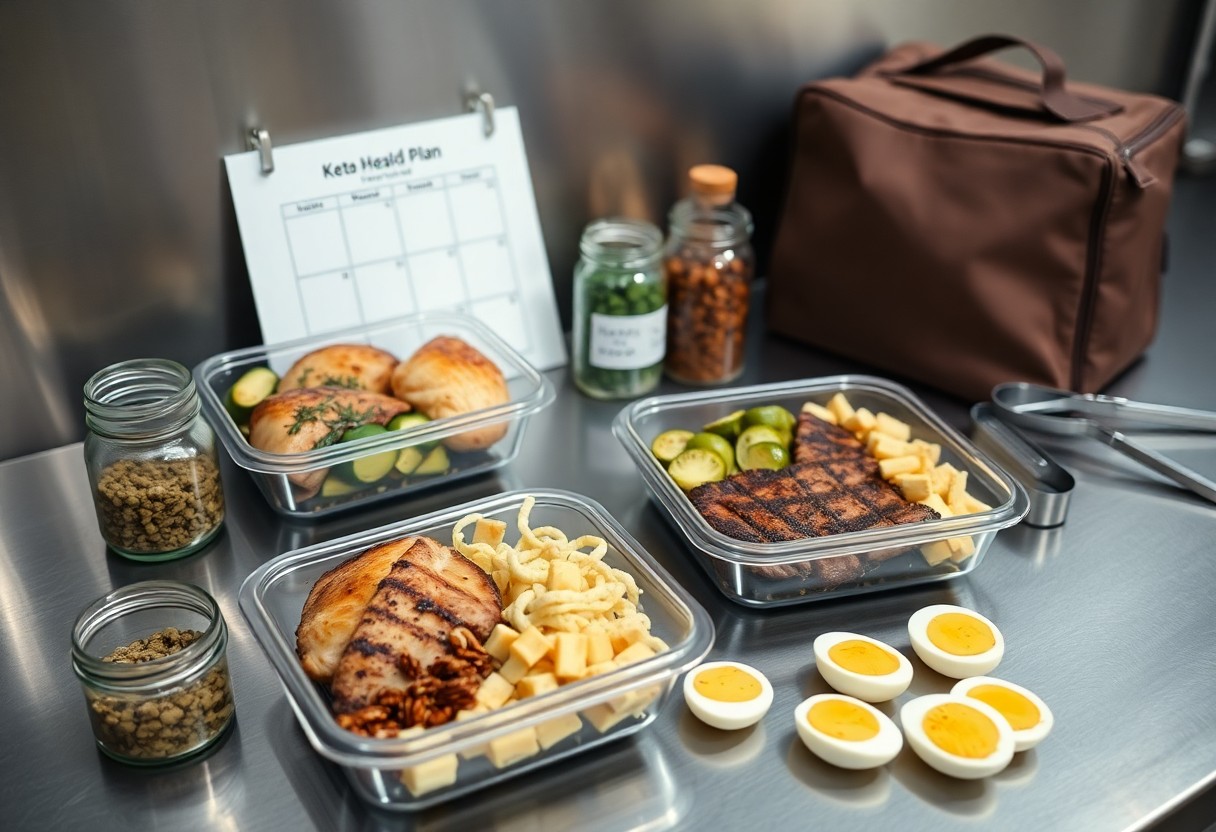
Efficient prep cuts decision fatigue and keeps macros tight: plan 3-4 dinner-sized meals and 2 snacks per day, aim for 20-30 g net carbs and ~70% calories from fat.
- Pick proteins that reheat well: chicken thighs, ground beef, salmon.
- Choose low-carb veg: cauliflower, spinach, broccoli, zucchini.
- Portion fats precisely with spoons or scales: olive oil, ghee, avocado.
Thou label and date containers, rotate meals every 3-4 days, and freeze extras for up to 3 months to retain quality.
Shopping List Essentials
You should stock week-long staples: 1.5 kg chicken thighs, 1 kg ground beef, 12 eggs, 8 avocados, 1 head cauliflower, 500 g spinach, 200 g cheddar, 250 g almonds, and a bottle each of olive oil and MCT oil. Include low-carb condiments (mustard, apple-cider vinegar), electrolyte sources (salt, potassium), and buy BPA-free containers plus a kitchen scale so you can hit macros precisely.
Batch Cooking Strategies
Block 2-3 hours on a weekend: roast 1.5 kg chicken and two sheet pans of broccoli/cauliflower at 200°C, and run a slow cooker with 1.2-1.5 kg pork shoulder for 6-8 hours. Portion into 4-5 meals of ~500-700 kcal with 20-30 g protein and ~20 g net carbs, cool within 2 hours, then refrigerate for 3-4 days or freeze for longer storage.
For more control, you can pre-weigh portions and store proteins, veg, and fats separately so you mix-and-match flavors across the week; blanch cruciferous vegetables for 1-2 minutes to preserve texture, use airtight glass containers for reheating, and swap sauces (pesto, herb butter, mayo-based dressings) to vary fat sources without changing macro totals. Tracking with a macro app for the first two weeks helps you refine portions and avoid carb creep.
Overcoming Challenges
Expect an early 2-7 lb drop in the first 10-14 days (mostly water), then plan for 0.5-1 lb (0.25-0.5 kg) of fat loss per week; manage common hurdles by drinking 2-3 L water daily, adding 1-2 tsp salt (~2-4 g sodium), 2-3 g potassium and 200-400 mg magnesium, prepping 3-5 days of meals, and keeping carbs to about 20-30 g net per day while tracking progress with an app like Cronometer.
Dealing with Keto Flu
When you hit brain fog, headache or fatigue 48-72 hours after cutting carbs, boost fluids to 2-3 L/day and increase electrolytes-add 1-2 tsp salt, eat potassium-rich foods like an avocado (~700-900 mg potassium) and take 200-400 mg magnesium; easing into ketosis over 7-14 days or using bone broth/bouillon can shorten symptoms, and many people report clear improvement within 48-72 hours after these adjustments.
Staying Motivated
Set measurable targets such as 0.5-1 kg (1-2 lb) per week or a 5-10% bodyweight goal over 8-12 weeks, track weekly averages and waist circumference, monitor ketones (blood 0.5-3.0 mmol/L or urine strips for trends), use a food app to hit 20-30 g net carbs and protein targets, and enlist a coach, accountability buddy or a 30-day challenge to sustain adherence.
For deeper persistence, schedule concrete habits: prep 3-5 days of meals every Sunday, log macros daily with Cronometer or MyFitnessPal, plan two 30-45 minute resistance sessions plus 1-2 HIIT or brisk cardio workouts weekly, and if you plateau reduce calories 5-10% or raise protein to ~1.2-1.6 g/kg; celebrate non-scale wins like improved sleep, belt-tightening or lifting progress to keep momentum-clients who combine prep, tracking and community adherence often move from ~60% to >85% consistency within a month.
Long-Term Sustainability of Keto
Sustaining a ketogenic approach long-term requires practical strategies: you can maintain 20-50 g net carbs/day for continued fat loss, or transition to 50-100 g to preserve muscle and energy as activity increases. Many people find alternating 5-6 low-carb days with one moderate-carb day prevents burnout. Use resources like The Ultimate Three-Day Ketogenic Diet Meal Plan to plan meals that keep protein at ~1.2-1.6 g/kg and calories in a 15-25% deficit when targeting rapid fat loss.
Adjusting the Diet Over Time
As you progress, track body composition, performance and ketone readings to guide tweaks: reduce calories by 5-10% if weight stalls, or bump protein to 1.6-1.8 g/kg to protect lean mass during deficit. Consider periodized carbs-20-30 g on rest days, 50-80 g on heavy training days-and re-evaluate every 4-8 weeks based on strength, sleep and hunger signals.
Reintroducing Carbs
When you reintroduce carbs, increase slowly-add 10-20 g net carbs per week while monitoring body weight, waist circumference and ketones (aim for 0.5-3.0 mmol/L if maintaining ketosis). Prioritize fiber-rich vegetables and time additional carbs around workouts; many people settle at 50-100 g/day for maintenance, or higher if training intensely.
Start with low-glycemic starches like sweet potato, oats or legumes and measure responses: expect water-driven weight shifts of 1-3 kg in the first two weeks. If performance improves without fat regain, continue gradual increases; if fat returns, scale carbs back 10-15% and increase activity or reduce fats to restore a 10-20% calorie deficit.
To wrap up
Drawing together, your keto meal plan emphasizes high-quality fats, moderate protein and minimal carbs so you transition to fat-burning, accelerate body-fat loss and improve metabolic efficiency; by tracking macros, prioritizing whole foods, managing hydration and electrolytes, and adjusting intake based on progress, you optimize results while minimizing side effects-consult a clinician for personalized guidance.
FAQ
Q: What does a keto meal plan focused on rapid fat loss and metabolic efficiency look like?
A: A fat-loss keto meal plan shifts the primary fuel source from glucose to ketones by limiting carbohydrates (typically 20-30 g net per day) and moderating protein to preserve muscle (about 1.2-2.0 g per kg of target/lean body weight). Fat supplies remaining calories and is adjusted to create a caloric deficit (generally 10-25% below maintenance) so the body mobilizes stored fat. Emphasize whole foods: fatty fish, eggs, avocados, olive/coconut oil, low-carb leafy and cruciferous vegetables, nuts and seeds. Avoid added sugars, grains, starchy vegetables, and most fruit. Track food, ketone levels (if desired), weight and body composition to confirm metabolic shift and progress.
Q: How should I set daily macronutrients and meal timing to maximize metabolic efficiency?
A: Start with targets: carbs 5-10% of calories (20-30 g net), protein 20-30% (adjust by body size and activity; 1.2-2.0 g/kg), fat 60-75% (fill remaining calories). Create a moderate calorie deficit for steady fat loss while preserving metabolism. Distribute protein evenly across 2-4 meals to support muscle protein synthesis. Keep meals rich in nonstarchy vegetables for fiber and micronutrients. Hydration and electrolytes (sodium, potassium, magnesium) must be increased as glycogen and water shift. Meal timing can be flexible - many people combine keto with time-restricted eating (e.g., 8-10 hour window) to support appetite control and metabolic benefits, but overall calorie and macronutrient targets matter most.
Q: Can you provide a sample one-day meal plan with approximate macros for rapid fat loss?
A: Sample (approx. 1,600 kcal; adjust for individual needs): Breakfast - 2 eggs scrambled in 1 tbsp butter, 1/2 avocado, handful spinach sautéed in olive oil (approx. 420 kcal; 34 g fat / 20 g protein / 6 g net carbs). Lunch - salad with 4 oz grilled salmon, 2 cups mixed greens, 1 oz feta, 2 tbsp olive oil + lemon dressing, 1/4 cup cucumber (approx. 520 kcal; 38 g fat / 32 g protein / 5 g net carbs). Snack - 1 oz macadamia nuts (approx. 200 kcal; 21 g fat / 2 g protein / 2 g net carbs). Dinner - cauliflower rice stir-fry with 4 oz chicken thigh, 1 tbsp coconut oil, broccoli, 1 tbsp sesame oil (approx. 460 kcal; 34 g fat / 30 g protein / 6 g net carbs). Daily totals ~1,600 kcal; ~127 g fat / 84 g protein / 19 g net carbs. Adjust portion sizes for your calorie target and protein needs.
Q: What side effects should I expect and how do I manage them safely?
A: Common early effects include fatigue, headache, lightheadedness, and constipation as fluids and electrolytes shift. Manage these by increasing sodium (add salt to foods, drink broth), ensuring 3-4 g potassium daily from low-carb vegetables and possibly supplements, and taking 200-400 mg magnesium if needed. Stay well hydrated and increase dietary fiber via nonstarchy vegetables and psyllium or chia if constipation occurs. GI upset can happen with MCT oil - introduce gradually. If you have diabetes, high blood pressure, are pregnant, breastfeeding, or on medications (especially SGLT2 inhibitors, insulin, or diuretics), consult a clinician before starting and monitor labs and symptoms closely.
Q: How should exercise and training be integrated to preserve muscle and accelerate fat loss?
A: Prioritize resistance training 2-4 times per week to preserve or build lean mass, which supports resting metabolic rate. Add moderate cardio or HIIT 1-3 times weekly to increase energy expenditure. For most people, standard keto works well with strength and low-moderate endurance; athletes or high-intensity trainers may use targeted keto (small carbs around workouts) or cyclical keto (periodic higher-carb refeeds) to support performance. Ensure adequate protein intake and recover with sleep and nutrients. Monitor progress with strength metrics and body composition rather than scale alone, and reduce calories further or adjust training intensity if fat-loss stalls for several weeks.



0 Comments