Fatloss programs combine compound strength lifts, progressive overload, targeted cardio, mobility work, and calibrated nutrition so you build strength while shedding fat; consult The Best Gym Routine for Weight Loss: A Practical Guide ... to structure sets, intensity, and recovery for your goals and overall fitness.

Key Takeaways:
- Use progressive overload and compound movements (squats, deadlifts, presses, rows) to drive strength gains while tracking load or reps over time.
- Pair resistance training with targeted cardio (HIIT and steady-state) and a protein-forward, slightly hypocaloric diet to maximize fat loss and preserve muscle.
- Follow a consistent, periodized plan with scheduled recovery, adequate sleep, and nutrition to improve overall fitness and reduce injury risk.
Understanding Strength Building
Strength development depends on improving neural drive and increasing muscle cross-sectional area; you should prioritize compound movements like squat, deadlift, and bench, train 2-4 times weekly, and emphasize low-rep heavy sets (1-6 reps) at roughly 80-95% of your 1RM. Novices often add 5-10 lb to upper-body lifts and 10-20 lb to lower-body lifts weekly, while intermediate lifters benefit from planned periodization and microloading to sustain gains.
Key Principles of Strength Training
You must balance intensity, volume, and recovery: aim for 3-6 working sets per main lift, 2-4 sessions per week per major movement, and 2-5 minutes rest between heavy sets. Prioritize specificity by practicing the exact movement patterns you want to improve, use accessory work in the 6-12 rep range for hypertrophy, and track volume (sets × reps × load) to quantify progress.
Importance of Progressive Overload
Progressive overload is how you force adaptation: increase load by 2.5-5% increments, add reps or sets, reduce rest, or raise training frequency to drive strength gains. For example, moving from sets of 3×5 at 185 lb to 3×5 at 195-200 lb over several weeks signals adaptation and forces further neural and muscular improvement.
Apply structured progression: start with linear increases while you're a novice, then shift to undulating or block periodization as progress slows. Use microplates (1-2.5 lb) to bridge small jumps, monitor RPE or reps-in-reserve so you avoid chronic overload, and schedule a deload every 4-8 weeks; many trainees add 20-30 lb to major lifts in 8-12 weeks with consistent, measured overload strategies.
Effective Workout Plans for Strength Building
Prioritize compound lifts with progressive overload and a clear weekly structure: aim for 3-5 sessions weekly, 3-6 sets of 3-6 reps on main lifts, 60-180 seconds rest between heavy sets, and track load increases of 2.5-5% when you hit target reps across all sets. Combine accessories (8-12 reps) to fix weak links and monitor weekly volume per muscle (12-20 sets) to guide recovery and growth.
Full-Body Strength Training Routine
You can use a 3x/week full-body layout with big lifts each session-squat, bench, deadlift, overhead press, and rows-performing 3-5 sets of 3-6 reps on two primary lifts and 2-4 accessory movements at 6-12 reps. Progress by adding 2.5-5 lb per session or adding a rep; mobility and 7-9 hours sleep support neural recovery between sessions.
Split Training for Advanced Lifters
When you advance, move to splits (push/pull/legs or upper/lower) 4-6 days weekly to increase per-muscle volume and intensity; target each muscle 2x/week with 12-24 weekly sets, use 4-6 reps for heavy compounds and 8-12 for accessories, and periodize intensity across 3-6 week blocks to avoid plateaus.
- 5x5 Strength Block: 3 sessions/week, main lifts at 5x5, add 2.5-5 lb per session when all reps hit.
- 3-Day Full-Body Sample: A-Squat/Row, B-Bench/Deadlift, C-Front Squat/OHP; rotate A/B/C, rest one day after two sessions.
- Progress Metrics: Track training maxes, RPE, and set failure rate; expect 1-3% monthly strength gains for intermediate lifters.
| Exercise | Sets × Reps / Notes |
| Back Squat | 4×4-6, build to heavy set |
| Bench Press | 4×4-6, pause rep every 4th week |
| Deadlift | 3×3-5, low volume, heavy focus |
| Bent-Over Row | 3×6-8, control tempo |
| Accessory (e.g., RDL, Pull-up) | 2-3×8-12, address weaknesses |
For split training you should structure intensity across the week: heavy compound days (4-6 reps) paired with moderate accessory days (8-12 reps) and one lower-intensity deload week every 4-6 weeks. Use push/pull/legs if you prefer higher session frequency (5-6 days), or upper/lower for four days; adjust total weekly sets so each major muscle gets 12-18 hard sets, and use weekly progression or autoregulation (RPE 7-9 scale) to manage load.
- Push/Pull/Legs 6-Day Example: Push (bench/OHP), Pull (dead/row), Legs (squat/hypers), repeat; alternate heavy and volume days.
- Upper/Lower 4-Day Split: Upper heavy, Lower heavy, Upper volume, Lower volume; rotate intensity every week.
- Recovery & Nutrition: Aim for 1.6-2.2 g/kg protein, caloric surplus for strength focus, and 7-9 hours sleep to support CNS recovery.
| Day | Focus / Prescription |
| Day 1 - Push | Bench 4×4-6; OHP 3×5; triceps 3×8-12 |
| Day 2 - Pull | Deadlift 3×3; Row 4×6; curls 3×8-12 |
| Day 3 - Legs | Squat 4×4-6; lunges 3×8; hamstring work 3×8-12 |
| Day 4 - Repeat/Deload | Repeat heavy/light pattern or take deload with 50-60% volume |
Fat Loss Through Exercise
Target a daily deficit of 300-500 kcal while pairing 150-300 minutes of moderate cardio per week with 2-4 resistance sessions to preserve lean tissue and accelerate fat loss. You should prioritize compound lifts (squat, deadlift, press) with progressive overload, include two HIIT sessions weekly for time-efficient caloric burn, and monitor body composition (body fat %, tape measurements) rather than scale-only changes to verify fat loss versus water or muscle loss.
Importance of Cardio in Fat Loss
Use cardio to increase total energy expenditure and improve cardiovascular capacity; follow guidelines of 150-300 minutes moderate or 75-150 minutes vigorous activity weekly. You can choose steady-state runs at ~60-70% HRmax for 30-45 minutes or HIIT protocols (e.g., 30s all-out, 90s rest, 8-12 rounds) to elevate EPOC-research shows HIIT often matches steady-state fat loss with substantially less time commitment.
Strength Training and Metabolism Boost
Prioritize strength training since each pound of muscle raises resting energy expenditure by roughly 6-10 kcal/day, so gaining 5-10 lb of muscle increases baseline burn meaningfully over time. Aim for 3 full-body sessions per week, using 3-6 sets of 4-8 reps for compound lifts to maximize strength and metabolic effect, while improving insulin sensitivity and preserving performance during caloric deficits.
Increase metabolic impact by combining compound lifts, progressive overload, and purposefully varied rep ranges: use 3-6 reps for maximal strength, 6-12 for hypertrophy, and 12-15 for metabolic stress, with 60-120s rest between sets. You should add 2.5-5% load once target reps are met, emphasize a 2-3s eccentric when possible, and consume ~0.7-1.0 g protein per lb of bodyweight-12-week interventions using this approach typically show superior fat loss with lean-mass retention versus cardio-only plans.
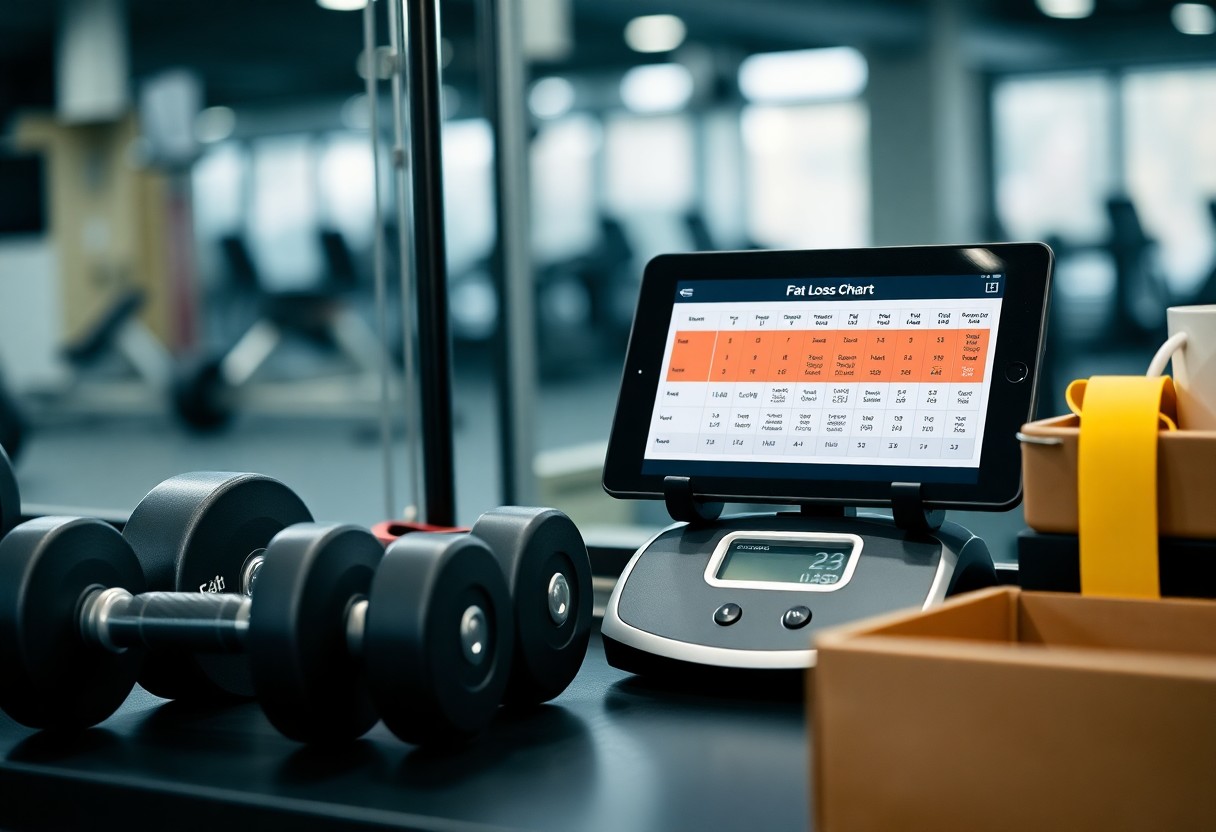
Comprehensive Workout Plans for Fat Loss
To maximize fat loss you combine resistance training, targeted cardio, and a modest calorie deficit of about 300-500 kcal/day to lose roughly 0.5-1 lb per week. Structure your week with three strength sessions focused on compound lifts and progressive overload, plus 2-4 cardio sessions, and track body composition rather than scale weight. Use 4-8 week blocks alternating higher-volume and higher-intensity phases to avoid plateaus and sustain metabolic adaptations.
High-Intensity Interval Training (HIIT)
Use 20-30 minute HIIT sessions 2-3 times weekly, such as 30s all-out efforts with 90s active rest repeated 8-12 times or a Tabata protocol (20s on/10s off ×8) for short, explosive work. You’ll boost VO2max and EPOC, often burning 200-500 kcal per session depending on bodyweight and effort, and maintain muscle by limiting frequency and keeping most strength sessions separate from intense intervals.
Low-Impact Cardio Workouts
Choose swimming, cycling, elliptical, or brisk walking to protect joints while burning calories; aim for 40-60 minutes at 60-75% of your HRmax (220−age) or an RPE of 4-6, 3-5 times weekly. Typical calorie expenditure ranges from about 250-600 kcal/hour depending on modality and intensity, and you can sustain longer durations to increase weekly energy deficit without excessive muscle fatigue.
Progress by increasing duration 5-10% weekly or adding gentle intensity surges like 2 minutes harder/3 minutes easy to raise metabolic demand without impact. Pair these sessions with resistance days (either separate or post-lift low-intensity cardio) to protect strength, and tailor frequency if you have joint or recovery constraints-non-weight-bearing options like pool workouts often allow higher weekly volume.
Overall Fitness and Wellness
Balance strength training with cardiovascular work, mobility, and recovery to optimize body composition and performance: aim for 3 strength sessions, 2 cardio sessions (20-40 minutes each), and 2 mobility/recovery days per week. Track sleep (7-9 hours) and protein intake (~1.6-2.2 g/kg) to support muscle retention while cutting. If you need a structured starting plan that blends fat loss and strength, follow the 8 Week Fat Loss Workout for Beginners.
The Role of Flexibility and Mobility
Prioritize a 5-10 minute dynamic warm-up before lifting and 8-15 minutes of post-workout mobility or static stretching to improve range of motion and reduce injury risk. Practice thoracic rotations, hip CARs, and ankle dorsiflexion drills three times weekly; many lifters regain 2-4 inches of squat depth within 4-6 weeks of consistent mobility work. Your joint health directly impacts load distribution and long-term progress.
Incorporating Active Recovery
Use active recovery days for low-intensity movement-walking, easy cycling, or restorative yoga-for 20-40 minutes while keeping heart rate under ~65% HRmax to promote circulation and metabolite clearance. Schedule 1-3 active recovery sessions weekly after hard workouts to speed recovery without adding fatigue, and combine them with 5-10 minutes of foam rolling or soft-tissue work.
For practical application, follow a simple template: heavy lower-body session on Monday, 30-minute brisk walk plus 10 minutes of foam rolling on Tuesday, moderate upper-body on Wednesday, light swim or bike on Thursday, and a longer mobility session on Sunday. Adjust volume based on soreness and weekly training load; you should feel refreshed rather than drained after an active recovery day.
Creating a Balanced Fitness Plan
Balance your weekly program with 3-4 strength sessions, 150-225 minutes of moderate aerobic work, and 2-3 flexibility/mobility sessions to support recovery. If you want a practical template, follow the 4-Week Body Recomposition Workout Plan To Lose Fat ... for a week-by-week example of progressive overload paired with calorie control. Adjust sets, intensity, and rest based on your progress and sleep quality.
Combining Strength, Cardio, and Flexibility
Start with three weekly compound-lift days (3-5 sets of 4-6 for strength, 3 sets of 8-12 for hypertrophy), add two 30-45 minute moderate-intensity cardio sessions, and include two 10-15 minute mobility or yoga sessions. You can swap a cardio day for a 15-20 minute HIIT session once or twice weekly to boost caloric burn without sacrificing recovery, preserving strength gains while improving conditioning.
Nutrition's Role in Fitness Success
Prioritize protein at 1.6-2.2 g/kg bodyweight, aim for a 300-500 kcal daily deficit for steady fat loss, and spread protein across 3-5 meals (20-40 g each). You should place most carbohydrate around workouts for performance, include healthy fats for hormonal support, and keep fiber and micronutrient-rich foods to sustain energy and recovery.
Use the Mifflin-St Jeor equation to estimate your maintenance, then subtract 300-500 kcal. For example, a 30‑year‑old, 75 kg moderately active person with maintenance ~2,700 kcal would target 2,200-2,400 kcal for recomposition. You should track intake with an app, weigh weekly, prioritize whole foods, take creatine monohydrate 5 g/day and supplement vitamin D if deficient, and increase protein slightly during heavy training blocks.
Final Words
Considering all points, your best workout plan balances progressive overload and compound movements for strength, targeted fat-loss strategies like HIIT and calorie control, structured recovery, and consistent progression tailored to your goals and limits; follow measurable benchmarks, adjust with feedback, and maintain discipline to achieve lasting overall fitness.
FAQ
Q: How should I structure a workout plan to build strength, lose fat, and improve overall fitness?
A: Prioritize compound lifts (squat, deadlift, bench, overhead press, row) 3-4 times per week to drive strength and metabolic demand, pair them with 1-2 accessory sessions for hypertrophy and imbalance correction, and add 2-3 cardio sessions per week mixing HIIT (10-20 minutes) and low-intensity steady-state (20-45 minutes) for fat loss and conditioning. Use periodization: a 4-8 week block focusing on strength (lower rep ranges, heavier loads), followed by a 4-8 week block emphasizing hypertrophy and higher volume. Schedule progressive overload by increasing load, reps, or sets gradually. Sample weekly split: Day 1-Heavy lower (strength), Day 2-Upper hypertrophy + conditioning, Day 3-Active recovery or LISS, Day 4-Heavy upper (strength), Day 5-Lower hypertrophy + HIIT, Day 6-Full-body circuit or mobility, Day 7-Rest.
Q: What nutrition approach supports simultaneous strength gains and fat loss?
A: Aim for a slight calorie deficit for fat loss (about 10-20% below maintenance) while prioritizing protein (1.6-2.2 g/kg bodyweight or 0.7-1.0 g/lb) to preserve muscle and support strength. Distribute protein evenly across meals (20-40 g per meal), place most carbohydrates around training sessions to fuel performance and recovery, and include healthy fats (20-30% of calories) for hormone function. Track calories and macros for 2-4 weeks, adjust intake based on weight and performance trends, and plan periodic refeed or maintenance weeks if strength stalls or metabolic adaptation appears. Hydrate and cover micronutrients with varied whole foods or targeted supplements if needed.
Q: How should I measure progress and adjust the program when I hit a plateau?
A: Track objective performance metrics (1-5 rep maxes, working set weights and reps), training volume (sets × reps × load), bodyweight and circumference measurements, and periodic progress photos. Use RPE or % of 1RM to manage intensity. If strength or fat-loss plateaus for 2-4 weeks, first check recovery factors (sleep, stress, calories, protein). Then adjust one variable at a time: increase training volume by 10-20% or add an extra quality session, reduce calories slightly (100-200 kcal) or increase NEAT, cycle in a deload week, or swap exercises to break technique plateaus. Keep systematic logs and make small, reversible changes.
Q: What recovery and injury-prevention strategies should be included in these plans?
A: Include a structured warm-up (joint mobility, dynamic movement, movement-specific warm sets), at least one mobility/flexibility session per week, and targeted prehab exercises for shoulders, hips, and knees. Monitor technique closely and progress load conservatively to avoid overload. Prioritize 7-9 hours of sleep per night, schedule deloads every 4-8 weeks depending on intensity, use active recovery (walking, light cycling) on off days, and address soreness with contrast baths, foam rolling, and soft-tissue work. If pain persists or worsens, reduce intensity and seek professional assessment.
Q: How long will it take to see strength improvements and fat loss, and what are realistic expectations?
A: Beginners can see measurable strength gains within 4-8 weeks and noticeable body composition changes within 6-12 weeks. Intermediate lifters will progress more slowly; expect smaller, steady strength increments and slower fat loss. Aim for sustainable fat loss of about 0.5-1% bodyweight per week for most people, adjusting pace based on athlete level and starting body fat. Evaluate progress over 8-12 week blocks, then reassess goals, training emphasis, and nutrition to continue progress without sacrificing recovery or performance.



0 Comments