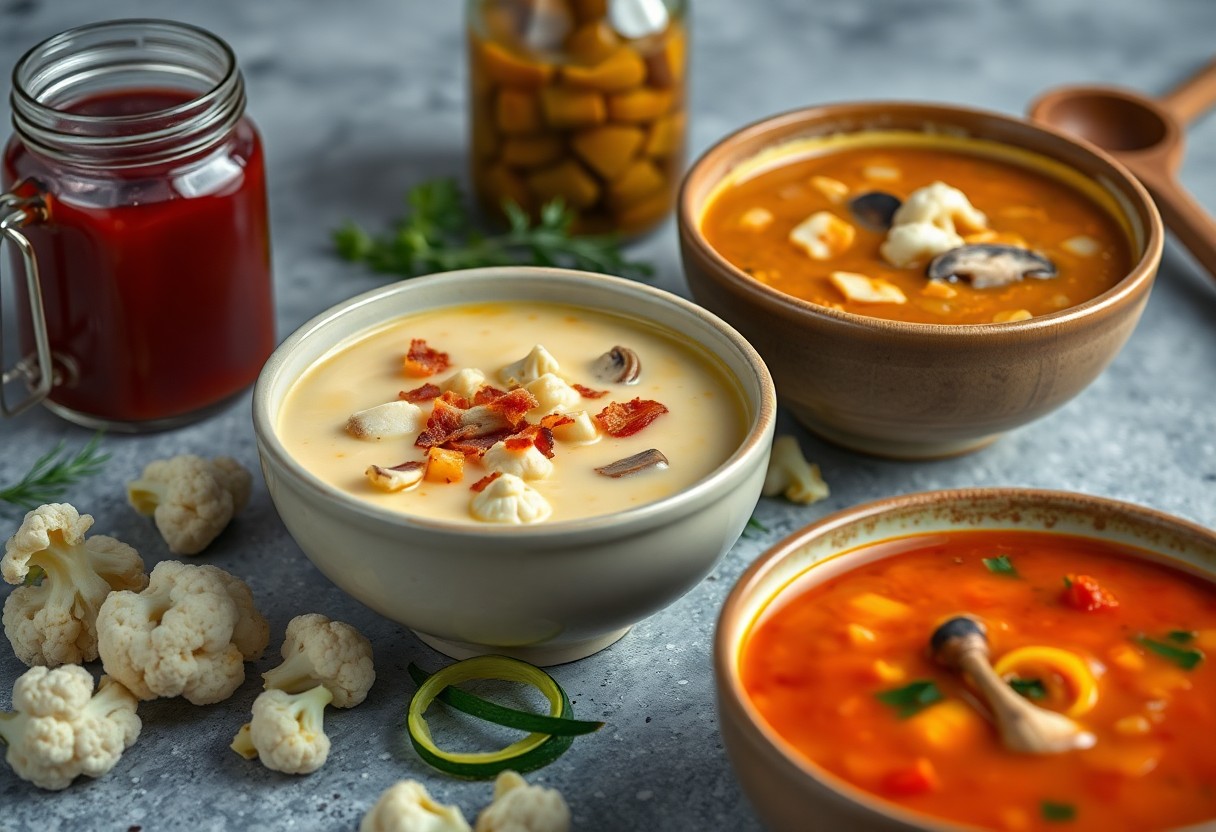
Most keto soups balance rich, comforting flavors with high-quality fats and low net carbs so you can enjoy satisfying meals that support your low-carb lifestyle. In this guide you’ll find easy, nutrient-dense recipes, tips for boosting satiety with protein and healthy fats, and substitutions to keep texture and flavor while minimizing carbs.
Key Takeaways:
- Prioritize high-fat, moderate-protein ingredients and low-carb vegetables to deliver comforting, keto-friendly soups that support ketosis (think bone broth, cream, fatty cuts, cauliflower, zucchini, leafy greens).
- Boost texture and satiety with purees, added cream or coconut milk, collagen or egg yolks, and toppings like grated cheese or toasted seeds to keep portions filling without extra carbs.
- Make soups practical: batch-cook and freeze portions, use low-carb thickeners (xanthan gum, cream cheese), amplify flavor with herbs and umami broths, and track net carbs per serving.
Understanding the Keto Diet
What is Ketosis?
When you trim carbs to about 20-50 g per day, after roughly 2-4 days your liver ramps ketone production-beta‑hydroxybutyrate and acetoacetate-to fuel brain and muscle. Blood ketone concentrations of about 0.5-3.0 mmol/L define nutritional ketosis, which you can confirm with finger‑stick meters or breath analyzers. This metabolic shift increases fat oxidation and lowers insulin, changing how your body uses fuel during exercise and rest.
Benefits of Low-Carb Living
Lowering carbs often delivers measurable benefits: many people lose 5-10% of body weight within 3-6 months, experience reduced appetite from stable blood sugar and ketone signaling, see triglycerides fall and HDL rise, and notice quicker improvements in fasting glucose. These effects can translate to fewer glycemic swings and improved satiety, supporting sustained adherence to a low‑carb plan.
If you have insulin resistance, cutting carbs below 50 g/day frequently blunts postprandial glucose spikes and can lower HbA1c by roughly 0.5-1.0% over 3-6 months in clinical settings. Appetite suppression from higher fat and protein intake often reduces daily calories without constant hunger. Monitor electrolytes, hydration, and medication needs with your clinician to maximize benefits safely.
Essentials for Keto Soup Ingredients
When you stock for keto soups focus on high-fat bases, low-carb vegetables, and savory broths: aim for 1-2 tablespoons of olive oil or butter per serving (olive oil ≈13.5g fat/tbsp), use bone broth for electrolytes and collagen, and add heavy cream or coconut milk to thicken. For recipe ideas and inspiration see 19 Keto Soup Recipes - Low-Carb, Keto-Friendly Soups.
High-Quality Fats
You should prioritize fats that add flavor and satiety: use butter or ghee (1 tbsp butter ≈11.5g fat; ghee tolerates higher heat with a ~485°F smoke point), olive oil (≈13.5g/tbsp) for finishing, avocado oil for high-heat searing, and MCT oil for quick ketone support (≈14g/tbsp). Heavy cream or full-fat coconut milk both thicken soups-start with 1-2 tablespoons per serving and adjust for texture.
Low-Carb Vegetables
Choose vegetables that keep net carbs low yet deliver volume: raw spinach (~1g net carb/cup), zucchini (~3g/cup), cauliflower (~3g/cup), broccoli (~4g/cup) and mushrooms (~2g/cup) let you bulk soups without spiking carbs. Rotate varieties to maintain micronutrients and aim for 1-2 cups of veg per serving depending on your daily carb limit.
To maximize texture and satiety, rice or purée cauliflower for a creamy base, spiralize zucchini into noodles, and wilt dense greens at the end to preserve nutrients. Track net carbs (total carbs minus fiber) so a cup of riced cauliflower (~3g net) rarely threatens a 20-30g daily limit, while peas or potatoes add substantially more carbs-measure portions and use those sparingly to stay within your targets.
Comforting Keto Soup Recipes
When you crave warmth without the carbs, these soups deliver rich textures and savory depth; explore a wider collection at 31 Keto Soup Recipes That Are Low Carb And High Flavor for inspiration-many bowls here stay under 8 g net carbs per serving and pair high-fat broths with low-carb veg to keep you full for 4-6 hours between meals.
Creamy Chicken and Mushroom Soup
You’ll use 1 lb dark-meat chicken, 8 oz cremini mushrooms, 2 tbsp butter and 1 cup heavy cream to achieve a velvety base; simmer 20-25 minutes, finish with thyme and 2 tbsp grated Parmesan-each 1½-cup serving averages about 5-6 g net carbs and 18-22 g fat, ideal for a satiating keto lunch.
Spicy Sausage and Kale Soup
You brown 12 oz spicy Italian sausage, add 6 cups bone broth and 4 cups chopped kale, then simmer 15 minutes for a hearty, 6-serving pot that typically contains ~6-7 g net carbs and 22-26 g fat per bowl; red pepper flakes and smoked paprika boost flavor without carbs.
You should brown the sausage well to render fat and deglaze the pan with ½ cup filtered water or apple-cider vinegar for depth, then add kale last so it keeps texture; store in the fridge up to 4 days or freeze in portions for 2-3 months, reheat gently to avoid overcooking the greens, and add a squeeze of lemon or 1 tbsp olive oil per bowl to brighten fats and electrolytes.
Vegetable-Based Keto Soups
You can rely on low-starch vegetables-zucchini, spinach, cauliflower, mushrooms-to craft bowls that stay around 4-8 g net carbs per serving. Use 2 cups of bone or chicken broth, 1-2 tablespoons of fat (olive oil, ghee), and 2-3 tablespoons of cream or coconut milk to reach keto ratios; many home-tested recipes produce a 12-ounce serving with roughly 12-18 g fat, 6-8 g protein, and the stated net carbs for sustained satiety.
Zucchini and Spinach Soup
Sauté one medium zucchini (about 1 cup, ~3 g carbs) with garlic in 1 tbsp olive oil, add 2 cups spinach and 2 cups broth, simmer 5-7 minutes, then blend until smooth. Stir in 2 tbsp heavy cream or 2 oz cream cheese for richness and 1-2 tbsp grated Parmesan for umami. You’ll have a 3-4 ingredient, nutrient-dense soup that typically stays under 6 g net carbs and keeps your meal both light and filling.
Roasted Tomato and Basil Soup
Roast 1 lb Roma or cherry tomatoes with 2 tbsp olive oil and 4 cloves garlic at 400°F (200°C) for 35-40 minutes to concentrate flavor without additives. Blend with 1-2 cups broth, finish with 2 tbsp heavy cream and a handful of fresh basil. This technique produces deep, caramelized tomato notes while keeping added carbs low and helping you stay within a 6-8 g net-carb range per 10-12 oz bowl, depending on tomato variety.
If you want to lower net carbs and boost volume, roast half the tomatoes with 200 g cauliflower florets; cauliflower adds bulk and about 3 g net carbs per 100 g while smoothing texture when blended. After pureeing, pass the soup through a fine sieve for silkiness and brighten it with 1 tsp lemon juice or 1 tbsp apple cider vinegar. For added richness fold in 2 tbsp mascarpone or 1 tbsp butter, and to thicken slightly use 1/8-1/4 tsp xanthan gum whisked into cold liquid before reheating.
Tips for Making the Perfect Keto Soup
You should brown proteins and sauté aromatics to develop flavor, deglazing the pan with 1-4 tbsp vinegar or wine; simmer vegetables 20-40 minutes for depth and bones 6-12 hours if using stock. Measure fats-1-2 tbsp oil or butter per serving-to boost mouthfeel without overdoing calories, and keep net carbs to about 5-8 g per bowl by prioritizing leafy greens and mushrooms. This preserves richness while staying low-carb.
- Sear 4-6 oz protein per serving for Maillard flavor.
- Add 1-2 tbsp acidic deglazer (vinegar or wine) to lift the base.
- Use 1-2 tbsp fat per serving for satiety and texture.
- Simmer veg 20-40 minutes; bones 6-12 hours for collagen.
- Salt at the end and taste in 3 stages: start, mid, finish.
Flavor Enhancements
You can boost umami with 1-2 tsp anchovy paste, 1-2 tbsp tomato paste, or a parmesan rind simmered 20-30 minutes and removed before serving; 1 cup sliced mushrooms per 4 servings adds glutamates naturally. Brighten bowls with 1 tbsp lemon juice or 1-2 tsp apple cider vinegar at the end, and finish with 1-2 tbsp high-fat garnish like crème fraîche or grated hard cheese for silkiness and extra calories when needed.
Meal Prep and Storage
You should cool soups to below 40°F within 2 hours by dividing into shallow containers, then refrigerate for 3-4 days or freeze up to 3 months; label with date and portion size. Omit dairy before freezing-add 1-2 tbsp cream or cheese when reheating to restore texture-and keep any added low-carb garnishes separate until serving to maintain freshness and appearance.
For reheating, thaw overnight in the fridge or use a 30-60 minute defrost in the microwave, then warm gently on the stovetop to avoid breaking emulsions; reconstitute thickness with 1-2 tbsp water or stock per cup if it concentrates. Freeze individual 1-2 cup portions in airtight containers, leaving 1/2-inch headspace for expansion, and use within 8-12 weeks for best flavor.
Nutritional Considerations for Keto Soups
Focus on nutrient density and electrolytes as you refine recipes: keep servings to roughly 4-10 g net carbs so they fit a 20-50 g daily limit, include sodium and potassium through broths, leafy greens, or avocado, and use high-fat finishes like olive oil or butter to boost satiety without adding carbs. Track fiber and sugar alcohols separately when logging net carbs.
Carb Counting
Calculate net carbs by subtracting fiber and erythritol-like sugar alcohols from total carbs; for example, a cup of cauliflower puree often nets 3-6 g depending on prep. Weigh portions and read labels-1/2 cup canned coconut milk can add 1-3 g net carbs while a cup of spinach adds 1-2 g. Log each ingredient to keep bowls within your daily target.
Balancing Macros
Aim for roughly 70-75% calories from fat, 20-25% from protein, and 5-10% from carbs per meal; that typically means 25-40 g fat and 15-30 g protein in a 300-500 kcal soup. Prioritize moderate protein to preserve muscle and enough fat to promote ketone production and sustained fullness.
For a concrete build: use 3 oz shredded chicken (~21 g protein), 2 tbsp butter (~22 g fat), 1/4 cup heavy cream (~10 g fat), and 1/2 cup cauliflower (~3 g net carbs) to yield about 30-35 g fat, ~20-22 g protein, ~6 g net carbs and ~380 kcal-adjust portions to hit your daily macro targets and keep sauces or thickeners low-carb.
Summing up
Conclusively, these keto soup recipes show you how to enjoy comforting, nutrient-dense bowls that keep your carbs low while maximizing satiety and flavor. You can adapt fats, proteins, and vegetables to suit your goals, streamline meal prep, and rely on trusted recipes like 25 Warm and Cozy Keto Soup Recipes Everyone Looks ... to make your low-carb routine sustainable and satisfying.
FAQ
Q: What makes a soup truly keto-friendly?
A: A keto-friendly soup is low in net carbohydrates and higher in fat with moderate protein. Use non-starchy vegetables (leafy greens, cauliflower, zucchini, mushrooms, broccoli), high-fat liquids (bone broth, heavy cream, coconut milk), and protein sources (chicken, beef, pork, seafood, eggs). Avoid starchy ingredients and legumes (potatoes, rice, corn, beans) and thicken with cream, cheese, egg yolks, pureed low-carb veg, ground nuts, or small amounts of xanthan gum instead of flour or cornstarch. Aim for portions that keep total net carbs per serving typically under 8-10 g, depending on your personal macro targets.
Q: How can I make keto soups feel comforting and keep me full longer?
A: Focus on fat and protein for satiety and texture: add butter, ghee, olive oil, heavy cream, coconut milk, or full-fat yogurt along with shredded or diced protein. Use bone broth for collagen and depth of flavor, simmer meats until tender, and include chunks of sausage, chicken, or fatty fish. Add fat-rich toppings-grated hard cheese, avocado slices, chopped macadamia or toasted almond slivers, or a drizzle of flavored oil-to create a satisfying mouthfeel. Serving soups alongside a fibrous low-carb salad or a small portion of roasted low-carb vegetables also lengthens fullness.
Q: What are reliable ways to thicken keto soups without starches?
A: Puree low-carb vegetables such as cauliflower, roasted turnip, or cooked mushrooms into a creaminess base; blend part of the soup and return it to the pot to thicken. Stir in cream cheese, mascarpone, shredded cheese, or egg yolks tempered into hot liquid for richness and body. Make a nut-based slurry with ground almonds or almond flour, or use a tiny amount of xanthan gum (start with 1/8-1/4 teaspoon) to avoid gumminess. Reduce the soup by simmering to concentrate solids and flavor rather than relying on flour-based roux.
Q: How do I adapt traditional soups-like chowders or stews-so they fit a low-carb plan?
A: Replace high-carb components with keto swaps: use riced cauliflower or zucchini noodles for rice/pasta, and cauliflower or kohlrabi for potatoes. Swap flour or cornstarch thickeners for cream, cheese, egg yolks, or pureed veg. Increase the proportion of fatty proteins (bacon, sausage, fatty cuts of beef) and add umami from mushrooms, soy-free coconut aminos, fish sauce, or bone broth to compensate for lost starchy bulk. Rebalance seasoning because fattier soups often need a touch more acid (lemon juice or vinegar) and salt to brighten flavors.
Q: What are best practices for storing, reheating, and freezing keto soups?
A: Cool soups quickly, store in airtight containers, and refrigerate up to 3-4 days. Freeze in portion-sized containers for 2-3 months; leave a little headspace for expansion. For soups with dairy, consider freezing without cream or cheese and add them when reheating to avoid separation-if already frozen with dairy, reheat gently and whisk to reincorporate. Thaw overnight in the fridge, rewarm slowly over low heat, and adjust thickness and seasoning after reheating. Label containers with date and contents, and reheat to at least 165°F (74°C) before serving.



0 Comments