You can build a balanced, nutrient-dense vegan diet by prioritizing legumes, tofu and tempeh, nuts and seeds, dark leafy greens, whole grains, and fortified plant milks; this list guides your grocery choices with protein, iron, calcium, omega-3s, and B12 sources so you can plan simple, satisfying meals that support daily health.
Key Takeaways:
- Prioritize nutrient-dense staples-legumes, tofu/tempeh, nuts, seeds, whole grains, and dark leafy greens-to cover protein, fiber, iron, calcium, and many B vitamins.
- Address common gaps by including fortified foods or supplements for B12 and vitamin D, and add ALA-rich foods (flax, chia, walnuts) or algae-based EPA/DHA; pair plant iron sources with vitamin C to improve absorption.
- Build balanced, convenient meals through variety and prep: batch-cook grains and legumes, combine protein + carb + healthy fat, and rotate colorful fruits and vegetables for broad micronutrient intake.
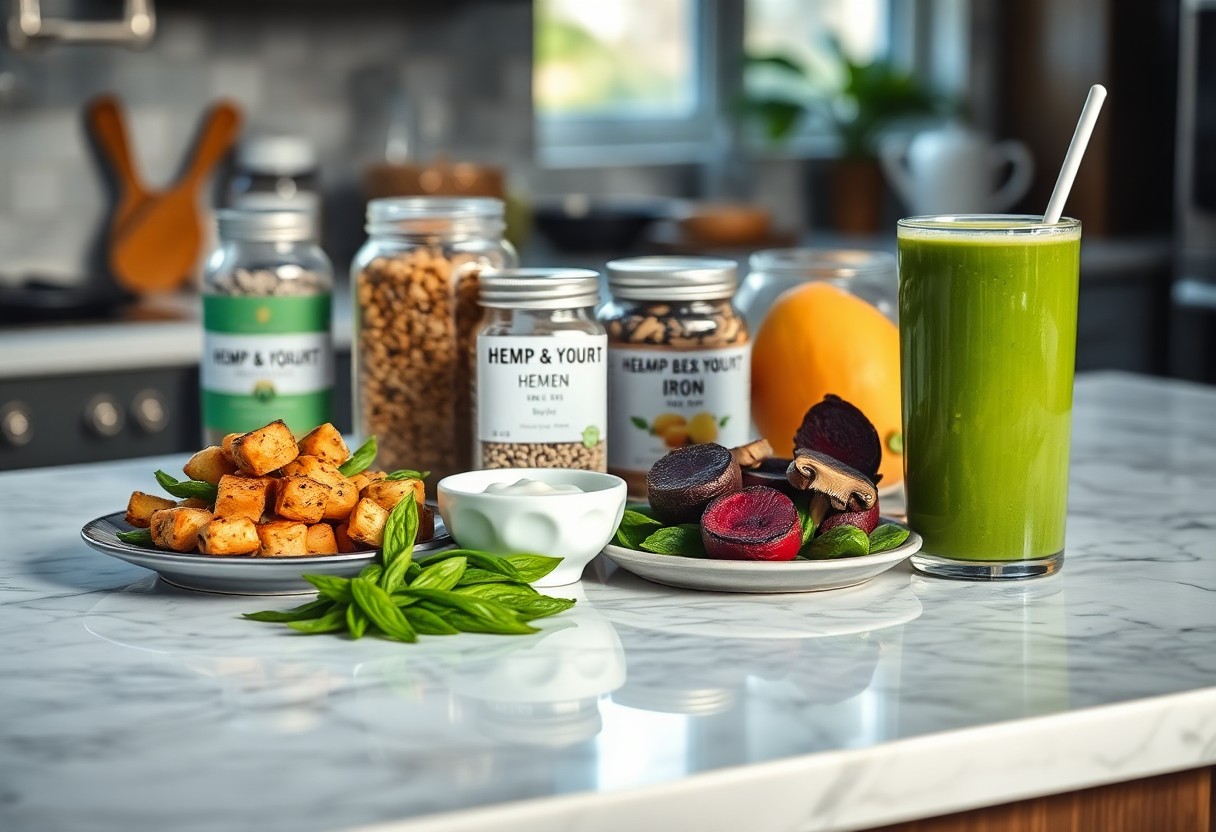
Benefits of a Vegan Diet
You can improve cardiometabolic health and nutrient density by emphasizing whole plants: one cup of cooked lentils provides about 18 g protein and 16 g fiber, while replacing processed meats lowers saturated fat intake. Cohort data from the Adventist Health Study-2 links vegetarian patterns to lower BMI and reduced type 2 diabetes prevalence, and randomized feeding trials report reductions in LDL cholesterol and systolic blood pressure with plant-based diets.
Nutritional Advantages
You meet macronutrient needs through smart combinations-grains plus legumes supply complete amino acids; for example, a cup of cooked quinoa has ~8 g protein and a cup of lentils ~18 g. Include omega-3 ALA sources like ground flaxseed (~1.6 g ALA per tablespoon), calcium-fortified plant milks (~300 mg calcium per cup), and plan for vitamin B12 via supplements (common regimens: 25-100 µg daily or 1,000 µg weekly) to secure micronutrient balance.
Environmental Impact
You reduce environmental impact substantially by choosing plants: FAO estimates livestock uses roughly 70% of agricultural land and contributes about 14.5% of global greenhouse gases. Poore & Nemecek’s global analysis shows beef often has 10-50× the greenhouse-gas footprint of pulses per kilogram of protein, so swapping red meat for legumes can cut your diet-related emissions by around 50% depending on your baseline.
Beyond emissions, you save freshwater and protect biodiversity-livestock-driven deforestation is a major cause of habitat loss, and animal agriculture demands far more land and water per calorie than pulses or grains. Prioritizing legumes, nuts, and seasonal local produce not only lowers your personal land and water footprint but also frees acreage that can be restored to carbon-sequestering ecosystems or diversified crops, magnifying long-term environmental gains.
Key Nutrient-Dense Vegan Foods
You’ll want to prioritize legumes, nuts, seeds, whole grains, leafy greens, and fortified foods for daily nutrition; for example, one cup cooked lentils delivers ~18 g protein and 16 g fiber, while fortified plant milks supply vitamin B12 and calcium. Rotate these groups so your meals consistently provide protein, iron, omega-3s, zinc, and vitamin D from varied plant-based sources.
Legumes and Pulses
When you rely on legumes and pulses, include lentils, chickpeas, black beans, and split peas: one cup cooked lentils gives ~18 g protein and 16 g fiber, chickpeas provide about 14-15 g protein per cup, and black beans supply roughly 15 g protein and 15 g fiber per cup. Pair them with whole grains and vitamin C-rich vegetables to boost amino acid complementarity and iron absorption.
Nuts and Seeds
You should include a variety of nuts and seeds daily: one ounce (28 g) of almonds has about 6 g protein and 3.5 g fiber, walnuts supply roughly 2.5 g ALA omega-3 per ounce, and chia, flax, and hemp seeds are concentrated sources of omega-3s, fiber, and magnesium that support heart and brain health in small portions.
Rotate raw and roasted nuts, and grind flax to access its oils; for example, one tablespoon ground flaxseed supplies about 1.6 g ALA, and an ounce of pumpkin seeds delivers ~7 g protein and notable zinc. You can snack on 1-2 handfuls (1-2 oz) daily, monitor calorie density (roughly 160-200 kcal/oz), and choose unsalted, minimally processed options to maximize nutrient payoff.
Whole Grains for Health
You can boost fiber and sustained energy by making whole grains a daily staple: one cup cooked quinoa delivers about 8 g protein and 5 g fiber, while a cup of cooked brown rice supplies roughly 5 g protein and 3.5 g fiber. They support blood sugar stabilization, gut health via prebiotic fiber, and provide B vitamins and magnesium. Aim for 3-6 servings of whole grains per day depending on your calorie needs.
Types of Whole Grains
Choose a variety: quinoa, oats, brown rice, barley, bulgur, farro, and millet each offer distinct textures and nutrient profiles-quinoa is higher in protein; oats provide beta‑glucan to lower LDL; barley and bulgur add chewy fiber; millet and sorghum are gluten‑free options. Rotate grains weekly to maximize nutrients and culinary interest.
- Quinoa - complete protein (≈8 g/cup cooked), great in salads and bowls.
- Oats - soluble fiber (beta‑glucan) for heart health; ideal for breakfasts and baking.
- Brown rice - versatile staple with ~5 g protein/cup cooked; pairs well with beans and vegetables.
- The gluten‑free options: millet, sorghum, and buckwheat - use for porridge, pilafs, and gluten‑free baking.
| Quinoa | ≈8 g protein/cup cooked; complete amino acid profile; salads, bowls, pilafs |
| Oats | High in beta‑glucan; lowers LDL cholesterol; oatmeal, overnight oats, baking |
| Brown Rice | ~5 g protein/cup cooked; long‑grain staple; stir-fries, grain bowls, soups |
| Barley | Chewy texture, soluble and insoluble fiber; stews, risottos, salads |
| Bulgur | Quick‑cooking whole wheat; high fiber; tabbouleh, pilafs, stuffing |
Cooking Tips and Serving Suggestions
Rinse grains like quinoa and barley to remove dust or saponins, toast oats and farro briefly to enhance flavor, and use a 2:1 water‑to‑grain ratio for most whole grains (adjust to 1.5:1 for quinoa). You should soak steel‑cut oats or brown rice to reduce cooking time and improve digestibility; measure portions-about 1/2 cup cooked per serving for denser grains-and pair grains with legumes for a complete amino acid profile.
- Rinse and drain small seeds (quinoa) before cooking to remove bitterness.
- Toast grains briefly in a dry pan to deepen flavor before adding liquid.
- Use vegetable broth and aromatics (onion, garlic, bay leaf) for savory grain bases.
- After cooking, let grains rest 5-10 minutes and then fluff with a fork for best texture.
Store cooked whole grains in airtight containers for 3-5 days in the fridge or freeze portions up to 3 months; cooled grains form resistant starch that can improve post‑meal blood glucose. You can batch‑cook 6-8 cups on weekends to streamline meals, mix textures (e.g., farro + quinoa) for interest, and use grains cold in salads or warmed in soups and casseroles.
- Batch‑cook a variety of grains to cover breakfasts, lunches, and sides.
- Use cooled grains in salads to increase resistant starch and satiety.
- Reheat with a splash of water or broth to restore moisture and texture.
- After freezing, thaw overnight in the fridge for the best texture and even reheating.
Fruits and Vegetables
You can build meals around colorful produce-berries, leafy greens, crucifers, sweet potatoes and citrus supply fiber, antioxidants and a broad micronutrient spectrum. Aim for 5-9 servings daily; one medium orange provides about 70 mg vitamin C and a cup of raspberries delivers roughly 8 g fiber. For a concise shopping checklist, consult Vegan Food List: 11 Foods That Healthy Vegans Eat.
Seasonal Varieties
Seasonality affects taste, price and nutrient density: summer yields tomatoes and berries, autumn brings apples and squash, and winter emphasizes citrus and hardy greens. You should buy at peak ripeness-farmers' markets often offer 20-30% lower prices-and freeze surplus to lock in nutrients. Practical swaps help: use roasted pumpkin for soups when fresh summer squash is unavailable.
Nutrient Profiles
Different vegetables and fruits target specific needs: leafy greens are rich in folate and vitamin K, orange vegetables supply provitamin A, brassicas offer sulforaphane and vitamin C, and bananas provide about 400 mg potassium each. You should vary cooking methods since heat boosts carotenoid availability while raw choices preserve some water-soluble vitamins, helping you meet diverse micronutrient goals.
To maximize uptake, pair iron-rich plant foods (lentils, spinach) with vitamin C sources-adding 25-50 mg vitamin C (a squeeze of lemon or a few strawberries) markedly increases nonheme iron absorption. You should also lower phytates by soaking, sprouting or fermenting; for example, tempeh and sprouted beans offer more bioavailable zinc and B vitamins than their unprocessed counterparts, and a half-cup cooked lentils gives about 9 g protein for balanced meals.
Plant-Based Protein Sources
Rely on concentrated plant proteins to hit your daily targets: seitan provides about 25 g protein per 100 g, tempeh about 19 g, firm tofu 8-12 g, and edamame roughly 11 g per 100 g. You should include legumes-one cup cooked lentils or chickpeas yields ~14-18 g-plus nuts, seeds, and fortified plant milks for added protein and calcium; varying textures and preparation methods helps keep meals satisfying and nutrient-dense.
Tofu and Tempeh
Fermented tempeh improves digestibility and supplies roughly 19 g protein per 100 g, while firm tofu delivers about 8-12 g per 100 g and can provide 200-350 mg calcium per 100 g when set with calcium salts. You can marinate and grill slices, crumble tempeh into taco fillings, or pan-sear tofu for salads and stir-fries to boost protein across meals.
Plant-Based Protein Powders
Pea, soy, rice, and hemp powders generally offer 15-25 g protein per 20-30 g scoop; pea and soy isolates often reach 20-25 g. You can add a scoop to smoothies, oatmeal, or baking to reliably top up daily intake, and choosing a powder with minimal additives helps control calories and sugar.
Prefer blends (pea + rice) to achieve a complete amino acid profile, and aim for 20-30 g protein per serving after workouts for muscle repair. You should check labels for added sugars, fillers, and third-party testing for heavy metals, and experiment with cocoa, banana, or spices to improve flavor and texture when mixing.
Meal Planning and Preparation
Batch-cook grains and legumes so you have 3-4 meal-sized portions ready: for example, cook 2 cups dry brown rice (yields ~6 cups cooked) and a large pot of lentils (about 8 cups cooked) to cover lunches and dinners for several days. Use airtight containers, label with dates, and portion meals into single-serving containers to speed reheating and reduce waste.
Weekly Meal Ideas
Rotate breakfasts like overnight oats with 2 tbsp hemp seeds (~6 g protein) and berries, lunches as grain bowls with 1 cup cooked quinoa (~8 g) plus 100 g tempeh (~19 g), and dinners featuring a 1½-cup lentil stew (~27 g protein). Aim for two vegetable-forward meals and one higher-protein option daily to hit macros and micronutrients without repetition.
Grocery Shopping Tips
Create a list organized by meal and aisle so you shop efficiently: prioritize fortified plant milks for your B12 and calcium, pick one can each of chickpeas and black beans, buy about 1 kg firm tofu, and grab frozen mixed vegetables. Check labels for sodium and added oils; rinsing canned beans can cut sodium by about 40%. Plan one main weekly shop and a quick midweek top-up.
- Stock pantry staples: oats, brown rice, quinoa, dried lentils and beans.
- Buy nuts and seeds in bulk to save money and keep 1-2 cup portions frozen for freshness.
- Choose frozen fruit and vegetables when cost or waste is a concern; nutrient retention is comparable for months.
- After shopping, divide perishable items into meal-sized portions and freeze or refrigerate with labels.
Stock 2-3 protein bases each week-for example 400 g tempeh, a 1 kg block of tofu, and 2 cups dry lentils-to vary textures and micronutrients. Freeze individual meal portions in 500-700 ml containers, label with dates, and plan to eat fresh produce within 4-7 days. Use a shared digital list so you avoid duplicate purchases and keep your pantry inventory current.
- Store grains and flours in airtight, opaque containers to prevent spoilage and pests.
- Keep tofu submerged in fresh water and change water every 2-3 days to extend use-by time.
- Portion sauces and dressings into ice-cube trays for single-serving thawing.
- After each shop, update your pantry inventory and note items with fewer than two remaining uses.
Final Words
The vegan foods list equips you with nutrient-dense options so you can plan balanced, varied meals that support energy, muscle, and immune health; focus on legumes, nuts, seeds, whole grains, fortified plant milks and leafy greens, and check reputable guidance like The vegan diet for portion, supplement and planning advice to meet your needs.
FAQ
Q: What plant foods should I prioritize for daily nutrient density?
A: Focus on a variety of whole foods that supply protein, fiber, vitamins, and minerals: legumes (lentils, chickpeas, black beans), soy foods (tofu, tempeh, edamame), whole grains and pseudograins (quinoa, oats, brown rice), nuts and seeds (almonds, walnuts, chia, flax, hemp, pumpkin), dark leafy greens (kale, spinach, Swiss chard), cruciferous vegetables (broccoli, Brussels sprouts), colorful vegetables and fruits (sweet potatoes, bell peppers, berries), mushrooms (especially UV-exposed for vitamin D2), and fortified items (plant milks, fortified cereals, nutritional yeast). Rotate these foods to cover varied micronutrients and to keep meals balanced and satisfying.
Q: How can I reliably meet my daily protein needs on a vegan diet?
A: Eat a mix of higher-protein plant foods across the day to meet needs (general adult guideline ≈0.8 g/kg body weight; active individuals may need more). Examples of protein-rich portions: 1 cup cooked lentils ~18 g, 1 cup firm tofu ~15-20 g, 1 cup tempeh ~30 g, 3 oz seitan ~20-25 g, 1 cup cooked quinoa ~8 g, 2 tbsp peanut butter ~8 g, 3 tbsp hemp seeds ~10 g. Combine legumes, soy, grains, nuts, and seeds across meals and include one concentrated protein source per meal (beans + grain, tofu/tempeh, tempeh salad, seitan stir-fry) to reach targets without relying on any single item.
Q: What strategies help optimize iron, vitamin B12, calcium, and omega-3 intake on a vegan plan?
A: Iron: include legumes, tofu, pumpkin seeds, quinoa, fortified cereals, and dark leafy greens; enhance non-heme iron absorption by pairing with vitamin C-rich foods (citrus, bell peppers, strawberries) and avoid drinking coffee or tea with iron-rich meals. Vitamin B12: obtain from fortified foods (nutritional yeast, fortified plant milks and cereals) or a reliable supplement-regular supplementation or testing is advised because plant foods rarely provide adequate B12. Calcium: choose fortified plant milks and juices, calcium-set tofu, tahini, almonds, and leafy greens like bok choy and kale; spread intake across the day. Omega-3s: consume ALA sources (flaxseed, chia, walnuts, hemp) daily and consider an algae-derived DHA/EPA supplement if dietary long-chain omega-3 intake is low, especially for pregnancy, breastfeeding, or those with higher needs.
Q: Can you give practical daily meal examples using nutrient-dense vegan foods?
A: Breakfast: fortified plant milk smoothie with spinach, frozen berries, ground flaxseed, oats, and a scoop of pea or soy protein; Lunch: lentil-quinoa salad with mixed greens, roasted sweet potato, pumpkin seeds, and a citrus vinaigrette; Snack: carrot sticks with hummus or apple with almond butter and a handful of walnuts; Dinner: tofu or tempeh stir-fry with broccoli, bell peppers, bok choy, brown rice, and sesame seeds; Evening: fortified plant yogurt with berries and chia seeds. Swap in fortified cereals, nutritional yeast on savory dishes, and roasted chickpeas or edamame for portable protein-rich snacks.
Q: Which fortified foods and supplements are most useful for vegans, and how should I incorporate them?
A: Commonly recommended fortified foods: plant milks and yogurts fortified with calcium and vitamin D, nutritional yeast fortified with B12, fortified breakfast cereals, and some meat alternatives enriched with micronutrients. Key supplements to consider: vitamin B12 (daily or weekly dosing, per healthcare advice), vitamin D if sunlight exposure is limited (typical maintenance doses range but discuss testing with a provider), algae-based DHA/EPA for direct long-chain omega-3s, and iodine if you don’t use iodized salt or sea vegetables. Use blood tests and guidance from a healthcare professional to tailor supplementation for iron, zinc, or other deficiencies rather than self-prescribing high-dose supplements.



0 Comments